


PRE-K
In Pre-K, children are building the foundation for all future reading and writing. They learn through play, conversations, songs and rhymes, exploring books and print, and listening to books read aloud. Strong oral language, vocabulary, and early sound awareness are some of the most important skills at this stage.
Explore this page for grade-level goals, activities, and resources!
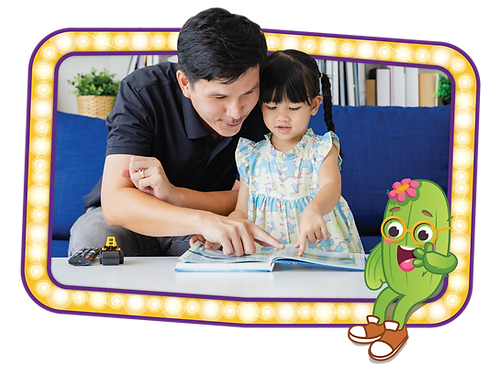

Language
Spoken language is the foundation of all literacy and is one of the easiest areas to develop at home through experiences and conversations.
END OF PRE-K GOALS
-
Listen carefully and understand what others are saying.
-
Express their thoughts, needs, and ideas verbally or nonverbally.
-
Use a growing vocabulary during play and other activities.
TOP TIPS TO HELP AT HOME
-
Talk all the time! Engage in back-and-forth conversations as much as you can.
-
Use big words, sentences, and ideas to help your child learn complex language.
-
Expose your child to new vocabulary through books and other educational content.
ACTIVITIES
Family Literacy Activities
RESOURCES
Reading 101 for Parents
Articles
Pre-Reading Skills
Pre-K children are learning skills that will prepare them to read and write, including alphabet knowledge (knowing letters and sounds), phonological awareness (hearing and playing with sounds in words), and print concepts (knowing how print works).
END OF PRE-K GOALS
-
Recognize letters of the alphabet and understand that letters help us read and write.
-
Start to hear and play with sounds in words, such as recognizing words that rhyme or start with the same sound.
-
Show that they know how print and books are read, for example, that we read from left to right and top to bottom.
TOP TIPS TO HELP AT HOME
-
Frequently point out and talk about letters and words in your environment.
-
Sing songs and play games with the sounds in words.
-
Practice holding books, turning pages, and pointing to text from left to right.
ACTIVITIES
Family Literacy Activities
Phonics Learning Apps
RESOURCES
Reading 101 for Parents
Reading Together
Pre-K children practice reading comprehension (understanding what is read) by listening to books that are read to them by an adult.
END OF PRE-K GOALS
-
Retell a familiar story with two or more events in order.
-
Talk about what they learned from stories, books, or literacy activities.
TOP TIPS TO HELP AT HOME
-
Help your child develop a love of reading by making it a fun experience where they get to connect with you.
-
Ask questions and have conversations about the book to help your child build their comprehension.
-
Set a goal to read for 20 minutes every day! If you don’t have a habit of reading yet, start small and build up. Having a set reading time (like before bed) can help.
ACTIVITIES
Family Literacy Activities
Virtual Story Time on Demand
RESOURCES
Book Lists and Recommendations
Books For Families from Community Partners
Reading 101 for Parents
Articles
Writing
Children in Pre-K express their ideas through drawing and are starting to understand and explore the idea that words can be represented through writing.
END OF PRE-K GOALS
-
Draw pictures and tell about their drawing.
-
Begin to share their ideas in writing using letters and symbols. Children often start writing by making scribbles and marks. As they learn letters, they will write strings of letters or make up their own spelling. All of these attempts at writing are a normal part of the process of learning to write!
TOP TIPS TO HELP AT HOME
-
Encourage drawing–it’s part of writing for young children!
-
Celebrate all attempts at writing, even if they are only making scribbles or marks! Try to keep writing time enjoyable and low pressure.
-
Young children are developing fine motor skills (strength and coordination in their fingers and hands), which is needed for writing! Give your child opportunities to hang on bars, play with playdoh, use beads, or do other activities where they use their hands and fingers.
ACTIVITIES
Family Literacy Activities
RESOURCES
Reading 101 for Parents
Articles